
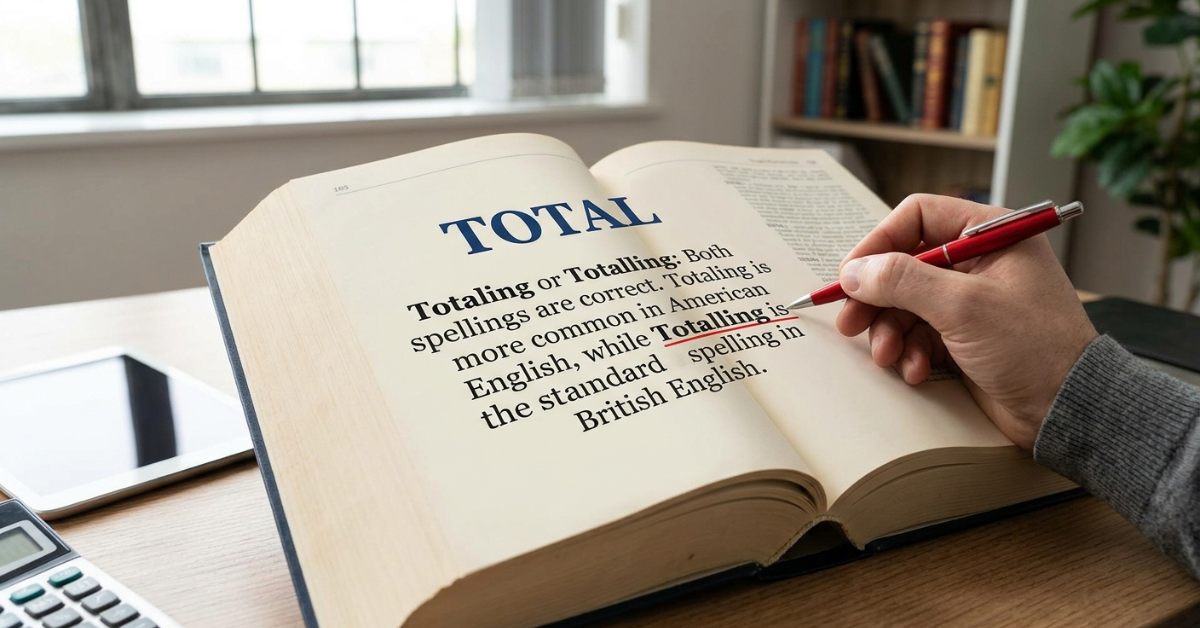
You’ve probably seen totaling and totalling written both ways and wondered whether one of them is simply a spelling mistake. The good news is that both are correct. The difference mainly depends on which variety of English you are using.
So, is it totaling or totalling? In American English, totaling is the standard spelling. In British English and several other varieties, including Canadian and Australian English, totalling is generally preferred.
The meaning does not change. Both forms are the present participle or gerund of the verb total, meaning to add numbers together or to amount to a particular figure.
Totaling or Totalling Meaning
Before looking at regional spelling differences, it helps to understand what the word means.
Totaling and totalling both mean adding things together to reach a total or amounting to a particular number or value.
For example:
- The expenses are totaling $2,000.
- The expenses are totalling £2,000.
- The order included 15 items, totaling $450.
- The damages were totalling thousands of dollars.
In each sentence, the word refers to the same idea. The spelling changes, but the definition remains the same.
The word can also describe something that amounts to a particular quantity:
The project has 20 employees, totaling five departments.
Here, totaling means “amounting to” or “making a total of.”
Is It Totaling or Totalling?
If you are asking “which is correct, totaling or totalling?”, the answer is: both are correct, depending on the English variety.
The main distinction is regional:
| English variety | Preferred spelling |
| American English | totaling |
| British English | totalling |
| Canadian English | totalling is commonly preferred |
| Australian English | totalling |
| General international use | Depends on the style guide |
The difference comes from how different varieties of English handle words ending in -l when adding suffixes.
Totaling in American English
In American English, totaling is the standard spelling.
Examples include:
- The repairs are totaling $5,000.
- The bill is totaling more than expected.
- The company reported losses totaling $2 million.
American English generally uses a single l in this form.
Totalling in British English
In British English, totalling is the preferred spelling.
Examples:
- The repairs are totalling £5,000.
- The costs are totalling several thousand pounds.
- The donations are totalling £20,000.
British English commonly doubles the final l before certain suffixes.
Totaling or Totalling UK Spelling
For UK spelling, use totalling with two Ls.
So if you’re writing for a British audience, the preferred form is:
totalling
Rather than:
totaling — less typical in British English
This follows a broader British spelling pattern. For example, British English commonly uses forms such as travelling, cancelling, and labelled, while American English generally uses traveling, canceling, and labeled.
However, spelling conventions can vary somewhat between individual words and style guides, so it is best to follow the style guide required by your publication or organization.
Totaling or Totalling US Spelling
For US spelling, use totaling with one L.
For example:
- The costs are totaling $10,000.
- The purchases are totaling $750.
- The project expenses are totaling nearly $50,000.
Therefore, if your audience is primarily American, totaling is the safest choice.
Totaling or Totalling Canada
Canadian English can sometimes be confusing because it shares characteristics with both American and British English.
In Canadian usage, totalling with two Ls is commonly preferred, particularly in formal Canadian English. However, Canadian spelling conventions are not simply a copy of British English, and usage can vary depending on the word and publication.
If you’re writing for a Canadian audience, totalling is generally a good choice.
The most important rule is consistency. Don’t switch between totaling and totalling within the same article or document without a reason.
Totaling or Totalling Australia
Australian English generally follows British-style spelling conventions for this word.
Therefore, totalling is the preferred form in Australian English.
For example:
- The expenses are totalling $8,000.
- The orders are totalling more than $20,000.
- The costs are totalling approximately $15,000.
If you’re writing for an Australian website, business, school, or publication, totalling is usually the better choice.
Why Are There Two Spellings?
The difference comes from regional spelling conventions rather than a difference in meaning.
The verb total ends in a consonant followed by l. When forming total + ing, English varieties differ in whether they double the final l.
American English typically writes:
total + ing → totaling
British-style spelling typically writes:
total + ing → totalling
This is similar to other spelling differences:
- traveling / travelling
- canceled / cancelled
- labeling / labelling
- modeling / modelling
There are exceptions, however, so you shouldn’t assume that every word ending in l follows exactly the same rule.
Totaling or Totalling Synonym
If you’re looking for a totaling or totalling synonym, the best alternative depends on how the word is being used.
When you mean adding numbers together, you could use:
- adding
- summing
- calculating
- counting
- tallying
- summing up
When you mean amounting to a particular figure, alternatives include:
- amounting to
- coming to
- reaching
- equaling
- measuring
Examples
Original:
The expenses are totaling $4,000.
Alternative:
The expenses are amounting to $4,000.
Original:
The purchases are totalling £2,500.
Alternative:
The purchases are coming to £2,500.
The original word is often the most natural choice, so there is no need to replace it simply to avoid repetition.
Totaling vs. Totalling in a Sentence
Here are some examples to make the difference easier to see.
American English
- The invoices are totaling $3,500.
- We received donations totaling $10,000.
- The repairs are totaling more than expected.
British English
- The invoices are totalling £3,500.
- We received donations totalling £10,000.
- The repairs are totalling more than expected.
Notice that the sentence structure and meaning remain exactly the same. Only the spelling changes.
Which Is Correct: Totaling or Totalling?
If you’re still wondering which is correct, totaling or totalling, here’s the simplest answer:
Both are correct.
Choose the spelling based on your target variety of English:
- Use totaling for American English.
- Use totalling for British English.
- Use totalling when following common Canadian English conventions.
- Use totalling for Australian English.
- Follow your organization’s style guide if it specifies a particular spelling.
The important thing is to remain consistent throughout your writing.
Is “Totaling” a Real Word?
Yes. Totaling is a standard English word and is not an incorrect or informal spelling.
It is the present participle and gerund form of the verb total in American English.
For example:
- Verb: The costs total $5,000.
- Present participle: The costs are totaling $5,000.
- Gerund: Totaling the expenses took several hours.
Likewise, totalling is the standard equivalent in British-style spelling.
Totaling or Totalling: Common Mistakes
Because the two spellings are both legitimate, the biggest mistake is usually mixing regional conventions.
For example, a writer might use:
The expenses are totaling £5,000, while the cancelled orders are totalling £1,000.
There is nothing grammatically wrong with either word individually, but the mixed spelling can look inconsistent if the document is supposed to follow one variety of English.
For professional writing, choose one style and stick with it.
Other common issues include:
- Assuming totalling is always correct.
- Assuming totaling is a spelling error.
- Mixing US and UK spelling throughout one document.
- Changing spelling without considering the intended audience.
- Treating the two spellings as having different meanings.
How to Remember the Difference
A simple way to remember it is:
US English → totaling
UK English → totalling
Think of it as a regional spelling preference rather than a grammar rule.
If you’re writing an American English article, choose totaling. If you’re writing in British, Australian, or commonly Canadian English, totalling is generally the safer choice.
Frequently Asked Questions
Is it totaling or totalling?
Both spellings are correct. Totaling is standard in American English, while totalling is preferred in British English and is also commonly used in Australian and Canadian English.
Which is correct, totaling or totalling?
Neither is universally “more correct.” The correct choice depends on the variety of English you’re using. Use totaling for US English and totalling for UK-style spelling.
Is totaling American or British spelling?
Totaling is the standard American English spelling. British English generally uses totalling.
Is totalling British spelling?
Yes. Totalling is the standard British English spelling of the present participle of total.
Is totaling or totalling used in Canada?
Totalling is commonly preferred in Canadian English, although Canadian usage can vary depending on the publication and style guide.
Is totaling or totalling used in Australia?
Australian English generally prefers totalling, following British-style spelling conventions.
What is a synonym for totaling or totalling?
Depending on the context, synonyms include adding, summing, calculating, tallying, amounting to, coming to, and reaching.
Does totaling and totalling have different meanings?
No. They have the same meaning. The difference is primarily a regional spelling variation.
Conclusion: Totaling or Totalling?
So, is it totaling or totalling? The answer is that both forms are correct, but your choice should match your audience.
Use totaling in American English, while totalling is generally preferred in British, Australian, and commonly Canadian English. Neither spelling changes the meaning of the word.
When in doubt, check the style guide you’re following and stay consistent throughout your writing. Once you know the regional difference, choosing between totaling or totalling becomes surprisingly simple.





