
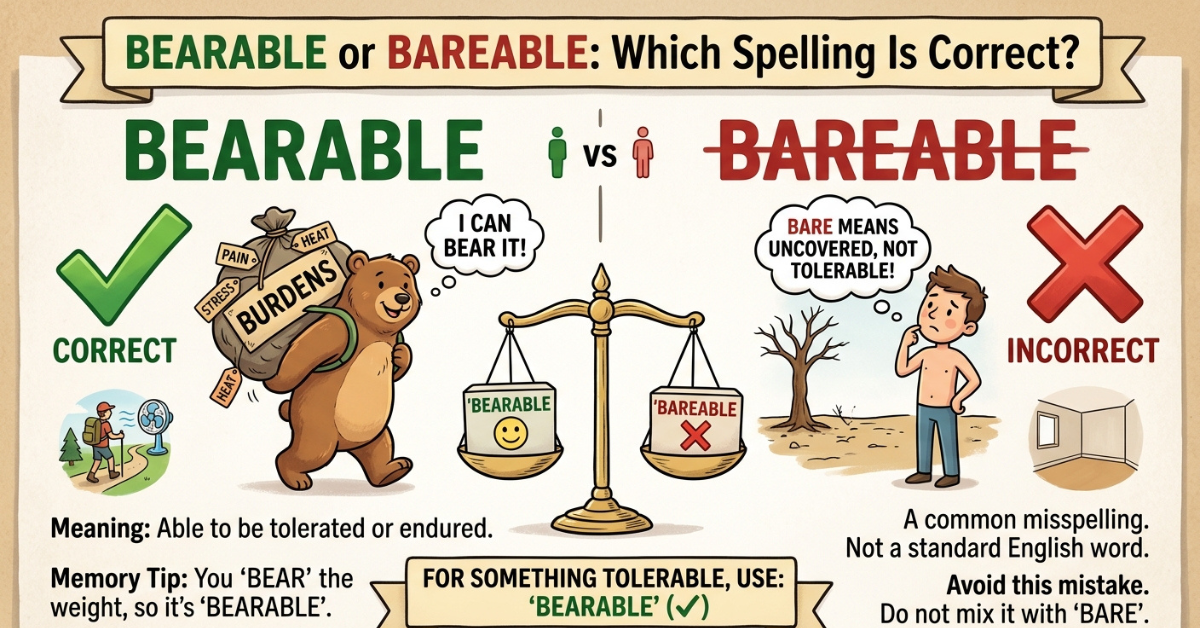
Have you ever wondered whether to write bearable or bareable? You are definitely not alone. These two spellings look almost identical, but only one is considered correct in standard English.
The correct spelling is bearable. It means something that can be tolerated, endured, or accepted without becoming too difficult or painful. Bareable, on the other hand, is generally considered a misspelling.
In this article, we’ll explain the difference between bearable or bareable, explore their meanings, provide examples, and share an easy trick to help you remember the correct spelling.
Bearable or Bareable: Which One Is Correct?
The answer is simple: bearable is the correct spelling.
The word bearable comes from the verb bear, which can mean to endure, tolerate, or withstand something difficult.
For example:
- The pain was bearable after taking medicine.
- The weather became more bearable in the evening.
- Her workload was difficult but still bearable.
The spelling bareable is not normally accepted as a standard English word when you mean something that can be endured.
Correct: Bearable
Incorrect: Bareable
So, if you’re asking, “Is it bearable or bareable?”, the correct answer is bearable.
What Does Bearable Mean?
The bearable meaning is fairly straightforward. It describes something unpleasant, painful, difficult, or uncomfortable that a person can still tolerate.
In simple words, if something is bearable, you can deal with it—even if you don’t enjoy it.
For example:
The heat was uncomfortable, but it was bearable.
This means the heat was unpleasant, but it was not so extreme that the person couldn’t handle it.
Common meanings of bearable include:
- Able to be tolerated
- Possible to endure
- Not too painful or difficult to handle
- Manageable despite being unpleasant
Why Do People Write “Bareable”?
One of the main reasons people confuse bearable or bareable is that the word “bare” is much more familiar in certain contexts.
The word bare means uncovered, empty, or without clothing or covering.
For example:
- He walked with bare feet.
- The walls were completely bare.
- She revealed the bare truth.
Because “bare” and “bear” sound the same in many accents, people sometimes mistakenly write bareable instead of bearable.
However, the meaning of bearable comes from bear, meaning “to endure,” not bare, meaning “uncovered.”
How to Spell Bearable or Bareable Correctly
If you’re wondering how to spell bearable or bareable, remember this simple rule:
Think of “bear” as “endure.”
The word can be broken down like this:
Bear + able = Bearable
Here, bear means to tolerate or endure, while -able means capable of being.
So, bearable literally means:
Capable of being endured.
That’s why bearable is the correct spelling.
An Easy Memory Trick
Think about this sentence:
“I can bear it, so it is bearable.”
If you can remember that bear = endure, you’ll be much less likely to accidentally write bareable.
Bearable Meaning With Examples
Understanding a word becomes easier when you see it used naturally. Here are some examples of bearable in everyday sentences.
Physical discomfort
- The headache was painful but bearable.
- After a few minutes, the cold water became more bearable.
- The injury caused discomfort, although the pain was bearable.
Difficult situations
- The long journey was tiring but bearable.
- Working late occasionally is bearable, but doing it every day can become exhausting.
- The situation was stressful, but it was still bearable.
Weather and temperature
- The temperature was extremely high during the afternoon but became bearable after sunset.
- Winter is more bearable when you have proper heating.
These examples show that bearable is often used when something is unpleasant but still manageable.
Bearable vs. Unbearable
A helpful way to understand bearable is to compare it with its opposite: unbearable.
Bearable
Something you can tolerate or endure.
Example:
The noise was annoying but bearable.
Unbearable
Something so painful, difficult, or unpleasant that it cannot be tolerated.
Example:
The noise became unbearable after several hours.
The prefix un- changes the meaning completely.
- Bearable = can be endured
- Unbearable = cannot be endured
This comparison can also help you remember the correct spelling. Since we commonly write unbearable, the positive form is naturally bearable.
Is “Bareable” Ever Correct?
In normal English usage, bareable is considered incorrect when you mean “able to be endured.”
You should write:
The pain is bearable.
Not:
The pain is bareable.
Technically, someone could attempt to create a nonstandard word from “bare,” but that is not how standard English uses the term. In everyday writing, academic work, professional communication, and SEO content, bearable is the spelling you should use.
Common Mistakes When Using Bearable
People often make a few common mistakes with this word.
1. Writing “bareable”
This is the most common spelling mistake.
Incorrect: The situation is bareable.
Correct: The situation is bearable.
2. Confusing “bear” with “bare”
Although they may sound alike, they have completely different meanings.
- Bear = to endure or tolerate
- Bare = uncovered or exposed
3. Using “bearable” for something enjoyable
Bearable doesn’t usually mean something is good or pleasant. It simply means you can tolerate it.
For example:
The movie was bearable.
This doesn’t necessarily mean the movie was great. It may suggest that the movie wasn’t enjoyable, but it wasn’t terrible enough to stop watching.
How to Use Bearable in a Sentence
Here are several natural ways to use bearable:
- The pain is finally becoming bearable.
- The workload is difficult but bearable.
- The weather is more bearable during the evening.
- The waiting time was barely bearable.
- With some adjustments, the situation became bearable.
- The noise was annoying but still bearable.
You can use the word to describe physical pain, emotions, weather, work, difficult situations, and many other uncomfortable experiences.
Bearable Synonyms
Depending on the context, you can use several words with a similar meaning to bearable.
Some common synonyms include:
- Tolerable
- Manageable
- Endurable
- Acceptable
- Sustainable
- Livable
- Reasonable
However, the best synonym depends on the situation.
For example, manageable often works well when discussing workloads or responsibilities, while tolerable is commonly used for pain, discomfort, or unpleasant conditions.
Bearable Antonyms
The opposite of bearable includes words that describe something impossible or extremely difficult to tolerate.
Common antonyms include:
- Unbearable
- Intolerable
- Insufferable
- Impossible to endure
- Overwhelming
For example:
The pain became unbearable.
This means the pain became too severe to tolerate.
Bearable or Bareable: Quick Comparison
Here’s a simple comparison to remember:
| Word | Correct? | Meaning |
| Bearable | Yes | Able to be tolerated or endured |
| Bareable | No | Common misspelling of “bearable” |
Whenever you’re unsure about bearable or bareable, choose bearable when talking about something that can be endured.
How to Remember the Correct Spelling
The easiest way to remember how to spell bearable is to connect it with the word bear.
Think:
Bear the pain → The pain is bearable.
Since bear means “to endure,” the spelling makes perfect sense.
Another helpful reminder is:
If you can bear it, it is bearable.
This simple phrase can prevent the common bareable spelling mistake.
FAQs About Bearable or Bareable
Is it bearable or bareable?
The correct spelling is bearable. It means something that can be tolerated or endured. Bareable is generally considered a misspelling.
What does bearable mean?
Bearable means capable of being tolerated, endured, or managed, even if something is unpleasant or difficult.
How do you spell bearable correctly?
The correct spelling is:
B-E-A-R-A-B-L-E
It comes from bear, meaning to endure, plus the suffix -able.
Why is it not spelled bareable?
It is not spelled bareable because the word comes from the verb bear, meaning “to endure.” The word bare has a different meaning related to being uncovered or exposed.
What is the opposite of bearable?
The most common opposite is unbearable, which means impossible or extremely difficult to tolerate.
Can bearable describe pain?
Yes. Bearable is commonly used to describe pain that is uncomfortable but still possible to tolerate.
For example:
The pain is severe, but it is still bearable.
Is bearable a positive or negative word?
It is generally neutral to slightly negative because it often describes something unpleasant that can still be tolerated. Saying something is “bearable” does not necessarily mean it is enjoyable.
Final Thoughts: Bearable or Bareable?
When it comes to bearable or bareable, the correct spelling is bearable.
The key is to remember that the word comes from bear, meaning “to endure” or “to tolerate.” Therefore, something that can be endured is bearable.
To quickly remember the rule, use this simple phrase:
“If you can bear it, it is bearable.”
Now that you know the difference, you can confidently use bearable in your writing without worrying about the common spelling mistake. If you’re interested in improving your English further, explore related articles on commonly confused words, spelling mistakes, and grammar rules.





