
Have you ever written “grately appreciated” and then wondered if the spelling looked wrong? If so, you’re not alone. Many English learners and native speakers search for grately or greatly because the two spellings look similar.
So, which one should you use?
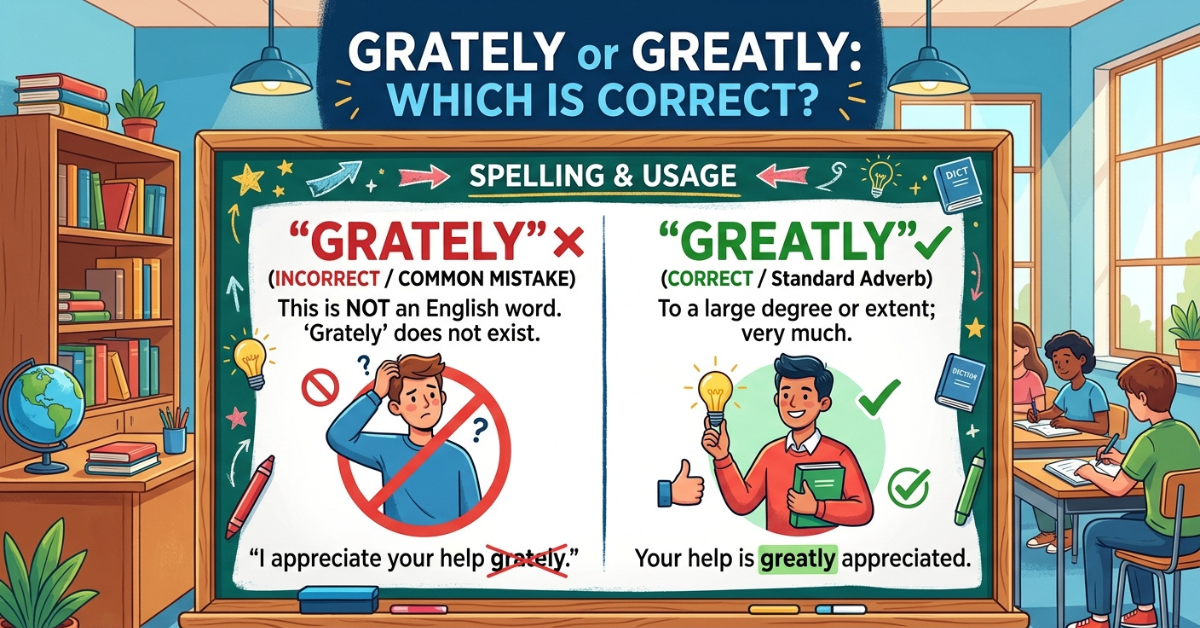
The correct spelling is greatly. In standard English, grately is a misspelling. Therefore, whenever you mean very much, significantly, or to a large extent, you should write greatly.
This guide explains the difference between grately or greatly, the meaning of greatly, and common expressions such as greatly appreciated and greatly missed. You’ll also find synonyms, examples, and answers to frequently asked questions.
Grately or Greatly: Which Is Correct?
The answer is simple: greatly is correct.
- Correct: Greatly = correct spelling
- Incorrect: Grately = incorrect spelling
The word greatly is an adverb. It usually means very much, considerably, significantly, or to a large extent.
For example:
- Your help is greatly appreciated.
- Everyone greatly misses her.
- The news greatly surprised us.
- This experience greatly improved my skills.
In contrast, grately does not work as the standard spelling in these sentences.
Why Do People Write “Grately”?
People often write grately because they confuse it with words such as grateful or gratitude. In other cases, simple typing mistakes cause the confusion.
For instance, someone might write:
Your support is grately appreciated.
However, the correct version is:
Your support is greatly appreciated.
Although the mistake seems small, correct spelling makes your emails, assignments, and professional messages look more polished.
Grately or Greatly Meaning: What Does Greatly Mean?
Understanding the meaning of greatly makes the correct spelling easier to remember.
What Does Greatly Mean?
Greatly means:
- Very much
- To a large extent
- Considerably
- Significantly
- Substantially
You can use it when something happens to a large or important degree.
Examples of Greatly in Sentences
Here are a few natural examples:
- I greatly appreciate your support.
- Your advice has greatly helped me.
- The new system has greatly improved productivity.
- The experience greatly affected her.
- Everyone greatly values your contribution.
In each sentence, greatly adds emphasis and shows that something has a significant effect.
Is It Grately or Greatly Appreciated?
One of the most common searches is “grately or greatly appreciated.”
The correct phrase is:
Greatly Appreciated
You can use greatly appreciated when you want to show that you value someone’s help, support, effort, or kindness very much.
For example:
- Your time is greatly appreciated.
- We greatly appreciate your cooperation.
- Your support is greatly appreciated.
- I greatly appreciate your understanding.
Moreover, this phrase works particularly well in professional and formal communication.
Where Can You Use “Greatly Appreciated”?
You can use this phrase in:
- Professional emails
- Business communication
- Thank-you messages
- Formal letters
- Client communication
- Academic correspondence
For example:
Your assistance with this matter is greatly appreciated.
This sentence sounds polite, respectful, and professional.
Grately or Greatly Missed?
Another popular question is whether you should write “grately missed” or “greatly missed.”
The correct phrase is:
Greatly Missed
Use greatly missed when you want to say that people miss someone or something very much.
For example:
- Everyone greatly misses her.
- Her colleagues greatly miss her presence.
- We will greatly miss his guidance.
- The team greatly misses its former manager.
Therefore, if you see “grately missed,” you should replace it with the correct spelling, greatly missed.
This expression often appears when someone leaves a workplace, moves away, retires, or passes away.
How to Remember: Grately or Greatly?
Fortunately, remembering the correct spelling is easy.
Think about the base word:
Great + ly = Greatly
Since great already contains the letter e, the adverb keeps that spelling.
Correct: Great → Greatly
Incorrect: Grat → Grately
As a result, connecting greatly with the word great can help you avoid the mistake in the future.
Grately or Greatly: Common Sentence Examples
Now that you know the correct spelling, let’s look at how greatly works in different situations.
Professional Examples
- We greatly appreciate your feedback.
- Your contribution has greatly benefited our company.
- The new strategy greatly improved our results.
- I greatly value your professional advice.
Personal Examples
- I greatly enjoyed spending time with you.
- We greatly miss having you here.
- Your gift greatly surprised me.
- I greatly appreciate your friendship.
Academic Examples
- Technology has greatly changed the way students learn.
- Regular practice can greatly improve your skills.
- The research greatly contributed to our understanding of the topic.
- Good study habits can greatly increase productivity.
These examples show that greatly can fit naturally into many types of writing.
Grately or Greatly Synonym: What Can You Use Instead?
If you use greatly too often, your writing may start to sound repetitive. Fortunately, several synonyms can express a similar idea.
Common Synonyms for Greatly
Depending on the context, you can use:
- Very much
- Significantly
- Considerably
- Extremely
- Highly
- Strongly
- Substantially
- Tremendously
However, you should choose the synonym carefully because each word carries a slightly different tone.
For example, these sentences have similar meanings:
- The change greatly improved the results.
- The change significantly improved the results.
- The change considerably improved the results.
Nevertheless, some synonyms sound more natural in certain situations than others.
Grately or Greatly Appreciated Synonym
If you want an alternative to “greatly appreciated,” several phrases can work well.
You can say:
- Deeply appreciated
- Truly appreciated
- Highly appreciated
- Much appreciated
- Very much appreciated
- Sincerely appreciated
For example, instead of writing:
Your support is greatly appreciated.
You could write:
- Your support is deeply appreciated.
- Your support is truly appreciated.
- Your support is much appreciated.
- I am extremely grateful for your support.
For professional emails, greatly appreciated and much appreciated both sound natural. However, much appreciated usually feels slightly more conversational.
Greatly vs. Gratefully: What Is the Difference?
Many people confuse greatly with gratefully because both words can appear in sentences about appreciation. However, they have different meanings and uses.
Greatly
Greatly means very much or to a large extent.
Example:
I greatly appreciate your help.
Gratefully
Gratefully means with gratitude or thankfulness.
Example:
I gratefully accepted their support.
Therefore, you should not use these words interchangeably.
Incorrect: I gratefully appreciate your help.
Correct: I greatly appreciate your help.
Similarly:
Incorrect: I greatly accepted their kindness.
Correct: I gratefully accepted their kindness.
Knowing the difference can make your writing more accurate and natural.
Common Mistakes When Using Greatly
Even after learning the correct spelling, writers sometimes make other mistakes with greatly.
1. Writing “Grately Appreciated”
Incorrect:
Your support is grately appreciated.
Correct:
Your support is greatly appreciated.
Always remember that greatly comes from the word great.
2. Confusing Greatly With Gratefully
These words have different jobs in a sentence.
Use greatly when you mean very much:
I greatly appreciate your help.
Use gratefully when you describe an action done with gratitude:
I gratefully accepted the offer.
3. Using Greatly Too Many Times
Repeating the same word can make your writing sound unnatural.
For example:
Incorrect: I greatly appreciate your greatly helpful advice, which greatly improved my work.
A smoother version would be:
Correct: I truly appreciate your helpful advice, which significantly improved my work.
Instead of repeating greatly, use appropriate synonyms to create a more natural flow.
When Should You Use “Greatly”?
Use greatly when you want to emphasize the strength or extent of something.
It commonly appears with verbs such as:
- Greatly appreciate
- Greatly improve
- Greatly influence
- Greatly affect
- Greatly benefit
- Greatly admire
- Greatly respect
- Greatly value
Examples
- I greatly admire her work.
- The decision greatly affected the company.
- This course greatly benefited my career.
- We greatly value your opinion.
In addition, greatly can strengthen expressions involving appreciation, respect, and emotional impact.
Is “Greatly Appreciated” Formal?
Yes, “greatly appreciated” is appropriate for formal and professional communication.
You can use it when writing:
- Work emails
- Job applications
- Business messages
- Client emails
- Formal requests
- Academic messages
For example:
Your prompt response to this matter would be greatly appreciated.
This wording sounds polite and professional.
Meanwhile, in casual conversations, you can use simpler alternatives such as:
Thanks, I really appreciate your help!
Both options are correct. The situation simply determines which tone works best.
Quick Comparison: Grately vs. Greatly
| Word | Correct? | Meaning |
| Grately | No | A common misspelling of “greatly” |
| Greatly | Yes | Very much or to a large extent |
| Gratefully | Yes | With gratitude or thankfulness |
| Grateful | Yes | Feeling thankful |
This quick comparison can help you remember the difference between these similar-looking words.
Frequently Asked Questions
Is it grately or greatly?
The correct spelling is greatly. In standard English, grately is a misspelling.
Is it grately or greatly appreciated?
The correct phrase is “greatly appreciated.”
For example:
Your support is greatly appreciated.
What does greatly mean?
Greatly means very much, significantly, considerably, or to a large extent.
For example:
Regular practice can greatly improve your skills.
Is “greatly missed” correct?
Yes, greatly missed is correct.
You can use it when someone or something is missed very much.
For example:
Everyone greatly misses her.
What is a synonym for greatly?
Common synonyms include:
- Significantly
- Considerably
- Very much
- Highly
- Extremely
- Substantially
However, the best synonym depends on the sentence and context.
What is a synonym for “greatly appreciated”?
You can use:
- Deeply appreciated
- Truly appreciated
- Highly appreciated
- Much appreciated
- Very much appreciated
Each phrase has a slightly different tone, so choose the one that best fits your message.
Is “grately” a real word?
In standard modern English, grately is generally treated as a misspelling of greatly. Therefore, if you mean very much or to a large extent, you should use greatly.
Conclusion: Grately or Greatly?
When choosing between grately or greatly, the correct spelling is greatly.
Remember that greatly comes from the word great, and it means very much, significantly, or to a large extent. Therefore, phrases such as greatly appreciated, greatly missed, and greatly improved all use the correct spelling.
By understanding the difference between grately, greatly, gratefully, and grateful, you can avoid a common spelling mistake and write with more confidence. Next time you wonder, “Is it grately or greatly?”, you’ll know the answer: greatly is correct.





